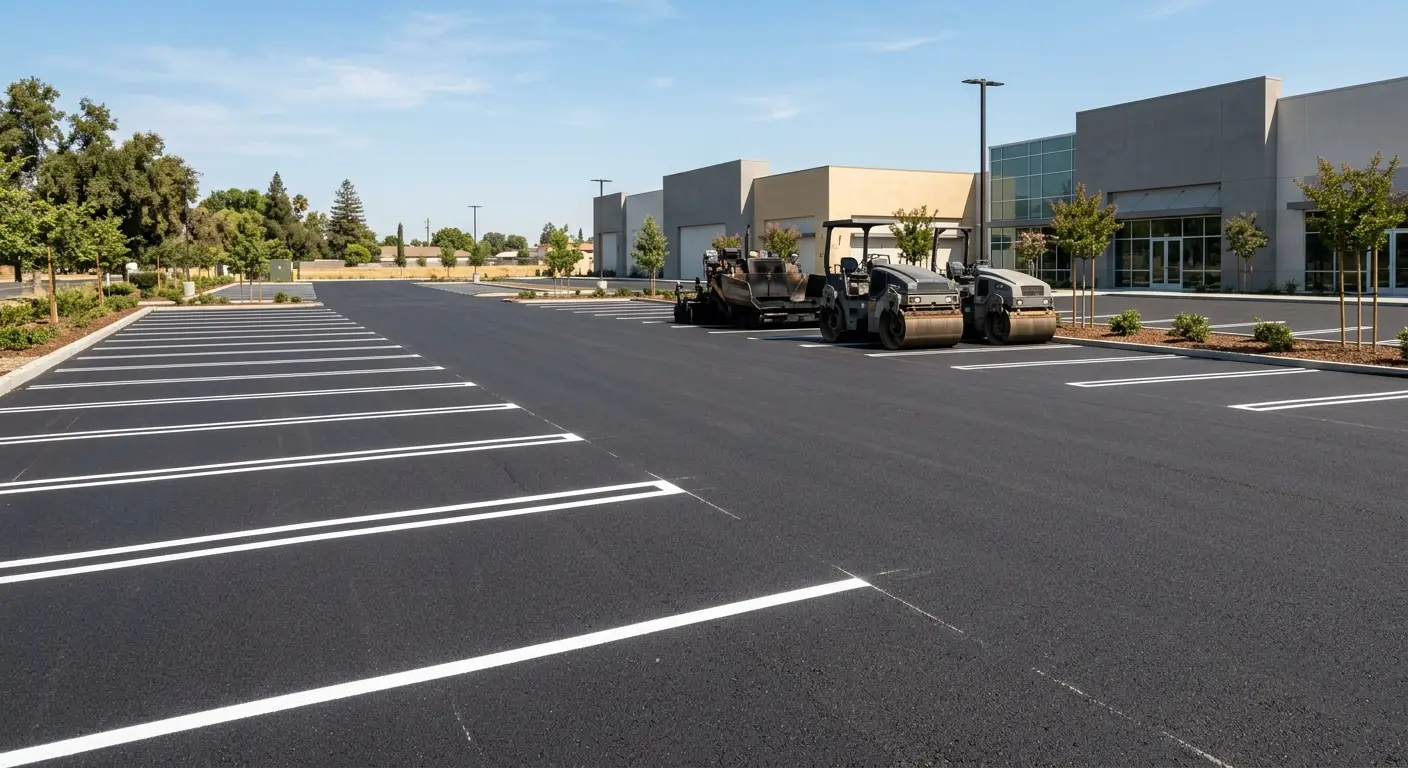
Planning for new parking lot construction requires careful coordination, especially when summer projects accelerate across the Central Valley. When managing new parking lot construction, commercial property owners and facility managers must navigate a complex series of local regulations, weather conditions, and technical requirements to ensure a durable result. Recent discussions surrounding local construction noise ordinances in Modesto highlight how critical proper scheduling is for heavy paving machinery. This article explores how new parking lot construction dictates the timeline for major commercial development and explains how local rules impact daily operations. Readers will learn the technical steps involved in installing a commercial parking surface from the ground up, the specific materials required by California state standards, and the compliance factors that protect a property investment. Understanding these elements prevents costly delays and ensures the final surface meets both municipal codes and long-term performance expectations in a demanding climate.
Modesto Bee Highlights Construction Noise Rules for Summer Projects
A recent inquiry from a local resident brought attention to municipal regulations regarding how early heavy equipment can operate in residential and commercial zones. According to the Modesto Bee report published on August 5, 2026, residents frequently ask what can be done when contractors ignore the city construction noise rules, prompting a review of the allowable hours for heavy machinery operation. The publication noted that heavy equipment operating before the strict 7:00 AM threshold in residential-adjacent zones can trigger immediate citations and fines of up to $1,000 per violation. This is highly relevant for new parking lot construction, as the grading and paving processes rely on large diesel equipment that generates significant decibel levels. The local guidelines dictate specific morning start times to balance community peace with the need for commercial development. For property managers planning new parking lot construction, these noise ordinances directly dictate project timelines and daily operational windows. Heavy machinery like graders, vibratory rollers, and asphalt pavers cannot simply start at dawn without risking code enforcement action. The concrete implication here is that paving contractors cannot simply stage their diesel trucks early; they must carefully orchestrate the arrival of hot mix asphalt from the plant to align precisely with the legal start time. If trucks arrive too early, they must idle off-site, risking the material cooling below its optimal compaction temperature before it can even be laid.
Furthermore, tracking the August 5, 2026 update on What's that new construction in greater Modesto? Answers for various sites reveals a surge in commercial development, meaning code enforcement officers are actively monitoring active job sites across the city, particularly along busy commercial corridors like McHenry Avenue and Pelandale Avenue. When contractors violate the established noise rules, the city can issue stop-work orders that derail a carefully planned schedule for new parking lot construction. Asphalt is a temperature-sensitive material that must be laid and compacted before it cools, making precise scheduling essential. If a project is halted mid-delivery due to a noise complaint, the hot mix asphalt can cool beyond the workable temperature of 275 degrees Fahrenheit. This temperature drop results in wasted material, forcing contractors to discard entire truckloads, which translates to a significant financial loss and days of project delays. Property owners must ensure their chosen paving contractors understand and strictly adhere to the Modesto municipal code regarding new parking lot construction hours. Staying informed through resources like the News Flash Modesto, CA portal helps facility managers anticipate regulatory shifts and plan their site improvements accordingly.
How Local Noise Ordinances Impact Modesto Property Managers
The intersection of local noise ordinances and commercial development creates specific challenges for property managers overseeing new parking lot construction. In Modesto suburbs like Village I, Salida, and Del Rio, the intense summer months offer the ideal ambient temperatures for asphalt curing, but they also coincide with open windows and higher community sensitivity to early morning noise. When a property manager schedules new parking lot construction, they must balance the technical requirement to lay asphalt during optimal temperature windows with the legal requirement to remain quiet until the permitted start time. Ignoring these local regulations carries severe consequences, ranging from immediate financial penalties to complete project shutdowns that disrupt tenant operations. If a contractor is forced to shut down their vibratory rollers mid-compaction due to a noise violation, it creates a critical failure mode known as a cold joint. A cold joint occurs when fresh, hot asphalt is laid against a section that has already cooled, preventing the two from fusing properly. This seam becomes highly susceptible to water intrusion, leading to premature raveling and eventual pothole formation across the lot.
If a neighborhood complaint triggers a visit from code enforcement, the resulting stop-work order can leave a commercial lot half-finished, disrupting tenant access and customer parking for days or weeks. This is especially critical in mixed-use developments where commercial spaces border residential neighborhoods. To maintain positive community relations, property managers must incorporate new parking lot construction compliance directly into their project contracts, referencing specific codes like the Modesto Municipal Code Title 4, Chapter 9 regarding noise control. This includes specifying equipment delivery times, engine warm-up periods, and the sequence of operations to ensure the loudest activities occur well within the legal operating hours. Tracking local infrastructure updates, such as the What's that new construction in Modesto? Answers for residential and commercial zones, provides insight into how other developers are successfully navigating these constraints. Proper planning helps prevent new parking lot construction from becoming a legal liability, ensuring the paving process moves forward smoothly without drawing negative attention from the municipality.
The Technical Process of New Parking Lot Construction
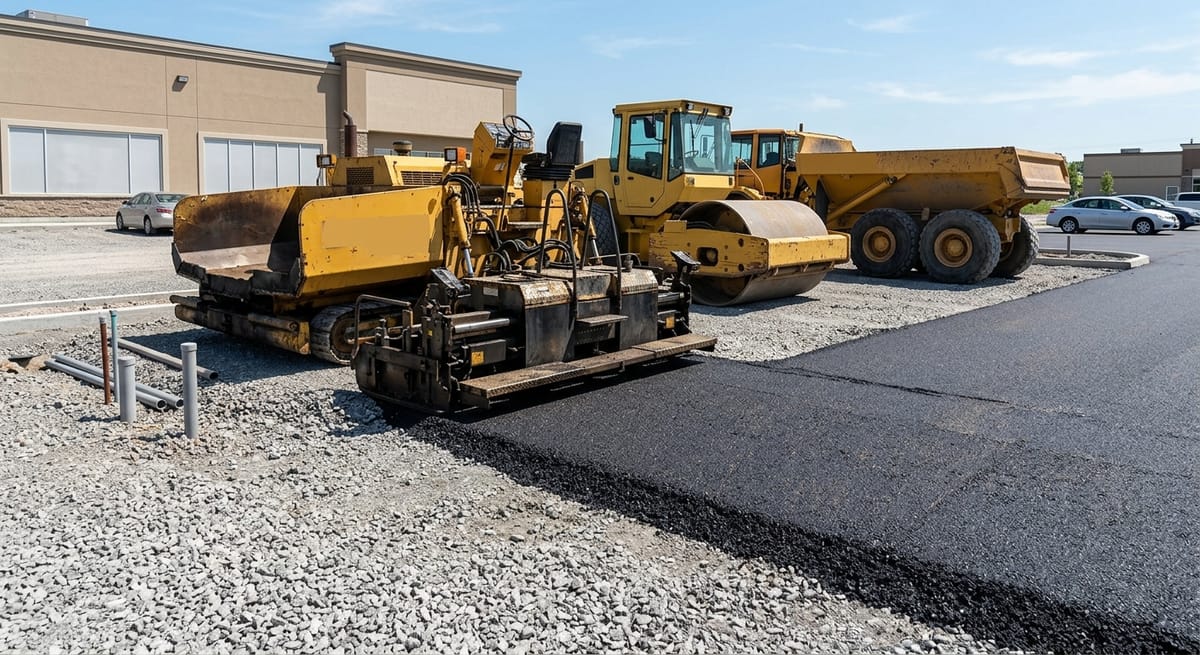
Executing new parking lot construction in California requires strict adherence to engineering standards, specifically the Caltrans Standard Specifications Section 39 for Asphalt Concrete and Section 26 for Aggregate Bases, alongside precise material specifications. The process begins with extensive site preparation, where heavy equipment excavates the existing soil to reach a stable subgrade. This native soil must be compacted to a specific density, typically 95 percent relative compaction, to prevent future settling. During the subgrade preparation, a municipal or third-party geotechnical inspector will typically check the soil using a nuclear density gauge to verify it meets this mandatory standard. They will also use a string line or laser level to ensure the grading perfectly matches the approved drainage plans. Once the subgrade is prepared and tested, contractors install the aggregate base course. In California, this typically involves Class 2 Aggregate Base, a specific blend of crushed rock that provides the structural foundation for the entire pavement system. During new parking lot construction, the base rock is spread evenly and compacted using vibratory rollers until it achieves the density required by the Caltrans Standard Specifications. This base layer acts as the load-bearing component of the parking area, distributing the weight of vehicles to prevent the asphalt above from flexing and cracking under pressure. Proper Site Grading Drainage For Commercial Properties during this phase is critical to ensure water flows away from buildings and toward designated stormwater management systems.
Following the base installation, the hot mix asphalt is delivered and applied. For commercial applications, the asphalt mix design must meet state standards, such as a 1/2-inch or 3/4-inch maximum aggregate size for optimal durability and load resistance. The paving machine lays the asphalt at a consistent thickness, typically in multiple lifts for heavy-duty commercial lots. Temperature control is paramount during this phase, as the asphalt must be compacted while it remains hot enough, usually between 275 and 300 degrees Fahrenheit, to achieve maximum density. Two common installation mistakes during this phase include paving over a wet subgrade and applying an insufficient tack coat between asphalt lifts. Paving over trapped moisture leads to immediate delamination, while a poor tack coat causes slippage cracks where the top layer of asphalt slides over the base under the braking force of heavy vehicles. Once the surface cools and cures, the final step of new parking lot construction involves precise line striping and pavement marking to direct traffic and designate accessible parking stalls. When reviewing a Sidewalk/Parking Lot Construction Bid in Modesto, California, property owners should verify that the contractor has specified the correct material depths and mix designs for the expected traffic volume.
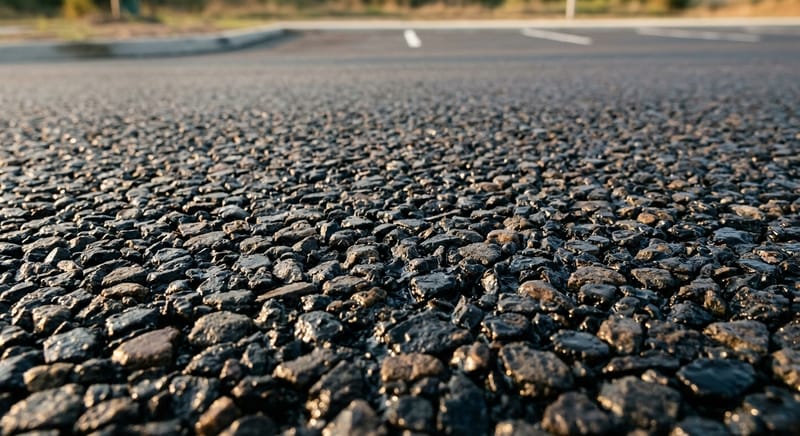
Three visible signs distinguish a high-quality installation from substandard work. First, a proper installation exhibits a smooth, uniform surface texture without segregated areas of coarse rock, indicating the hot mix asphalt was properly mixed and maintained at the correct temperature. Second, the surface will have precise, consistent slopes that direct water directly into catch basins without leaving standing puddles after a rainstorm. Third, the transitions between the new asphalt and existing concrete gutters or sidewalks will be perfectly flush, preventing tripping hazards and protecting the pavement edges from raveling. Conversely, poor workmanship often reveals itself quickly through base failure, where the surface ruts under heavy wheel loads, or alligator cracking, which indicates the subgrade was not compacted adequately before the base rock was applied. Another common mistake is ignoring ambient temperature minimums; paving when the air temperature is below 50 degrees Fahrenheit prevents adequate compaction, leaving the surface porous and vulnerable to rapid oxidation and water damage. These failures require complete removal and replacement, making strict adherence to technical standards during new parking lot construction absolutely essential.
Planning Your Commercial Paving Project: First Steps
Before initiating new parking lot construction, property managers must conduct a thorough site assessment and document the existing conditions. This involves photographing the current landscape, noting any existing drainage issues, and identifying the exact locations of property lines, underground utilities, existing catch basins, and concrete curb transitions. Documenting the site before any heavy machinery arrives protects the property owner from liability and provides a clear baseline for the project scope. This visual record is invaluable for insurance purposes and ensures that the contractor understands the specific topographical challenges of the site, such as clay-heavy Central Valley soils that hold moisture or areas where tree roots have compromised the soil stability.
The next critical step is verifying the municipal permit requirements for new parking lot construction in Modesto. Property owners must consult the local building department to determine if their specific project requires a grading permit, a Stanislaus County Public Works Encroachment Permit, or a formal Storm Water Pollution Prevention Plan (SWPPP). Proceeding without the necessary municipal approvals can result in immediate stop-work orders, heavy fines, and the potential requirement to tear out completed work. The permit approval process in Stanislaus County can take four to six weeks during the peak summer construction season, which directly impacts the project timeline and must be factored into the overall schedule before any equipment is mobilized.
Acquiring comprehensive quotes is essential for comparing contractor capabilities and ensuring all technical specifications are met. A professional quote for new parking lot construction must detail the exact depth of the excavation, the thickness and type of the aggregate base, the specific mix design, the required tonnage of asphalt, tack coat application rates, and the compacted thickness of the hot mix asphalt. If a proposal lacks these specific measurements or lumps the costs into a single generic figure, it is a strong indicator of substandard practices. Property managers should obtain at least three detailed proposals and compare the specified materials and methods rather than simply choosing the lowest bottom-line price.
Verifying contractor credentials protects the property owner from significant financial and legal risks. In California, any contractor performing new parking lot construction must hold an active C-12 Earthwork and Paving Contractor license issued by the Contractors State License Board. Property managers must verify this license status directly through the state registry and demand proof of comprehensive general liability insurance and workers compensation coverage. Property managers should specifically ask for a Certificate of Insurance with an Additional Insured endorsement, verifying at least $1 million in general liability and specific completed operations coverage. Allowing an unlicensed or underinsured operator to perform heavy excavation and paving exposes the property owner to liability for property damage, underground utility strikes, and workplace injuries.
Time-sensitive factors and local climate conditions play a major role in the success of new parking lot construction. In the Central Valley, the intense summer heat provides excellent conditions for asphalt compaction, but contractors must carefully manage the material to prevent it from cooling too quickly during transport. Conversely, paving during the cooler, wetter winter months, especially when the Central Valley Tule fog traps ground moisture, risks poor compaction and trapped moisture, which severely compromises the structural integrity of the pavement. Property managers must schedule their projects to align with favorable weather patterns while simultaneously navigating the local construction noise ordinances that restrict early morning start times.
Finally, recognizing when professional intervention is non-negotiable prevents costly mistakes and ensures long-term structural stability. While property owners might handle minor aesthetic maintenance, new parking lot construction requires heavy earthmoving equipment, precise laser grading, and specialized paving machinery like GPS-guided graders and pneumatic tire rollers that only licensed professionals can operate safely. Attempting to manage subgrade compaction or drainage slopes without engineering expertise inevitably leads to standing water, base failure, and the complete deterioration of the asphalt surface. Engaging a qualified commercial paving contractor ensures the project meets all municipal codes, complies with state material standards, and delivers a durable surface that withstands heavy vehicular traffic.
Ensuring Compliance and Quality in Asphalt Installation
Delivering a durable surface during new parking lot construction requires strict compliance with state licensing requirements and accessibility standards. In California, the Contractors State License Board (CSLB) mandates that all commercial paving projects be executed by a licensed C-12 Earthwork and Paving Contractor. This licensing requirement ensures the contractor possesses the technical knowledge to manage complex soil conditions, implement proper drainage slopes, and apply hot mix asphalt according to state specifications. Under California Business and Professions Code Section 7028, contracting without a valid CSLB license is a misdemeanor carrying penalties of up to a $5,000 fine and six months in county jail. When property managers bypass these requirements to save money, they expose themselves to severe consequences, including failed municipal inspections and the rapid deterioration of the pavement. Furthermore, commercial properties must adhere to strict federal and state accessibility guidelines. Tracking local developments, such as the Two west Modesto parks getting a makeover. What this means for neighborhood infrastructure highlights the ongoing emphasis on compliant, accessible public spaces across the region.
Substandard work in new parking lot construction often leads to voided manufacturer material warranties and significant legal exposure. If an unlicensed contractor fails to meet the strict ADA compliance standards, such as exceeding the maximum 2 percent cross-slope for accessible parking stalls, the property owner faces immediate premises liability claims and potential civil rights lawsuits. If a contractor fails to install the aggregate base to the required depth or uses an incorrect asphalt mix design, the surface will fail prematurely under the weight of commercial traffic. These structural failures not only require expensive remediation but can also trigger liability issues if a customer or tenant is injured due to a pothole or uneven surface. Property managers must prioritize quality and compliance from the initial grading phase through to the final line striping of new parking lot construction. To understand the full scope of available solutions, facility managers can review options for Commercial Industrial Asphalt Paving, which covers the heavy-duty requirements of high-traffic environments. Additionally, ensuring the final surface meets all legal requirements is critical, which is why coordinating with experts in Ada Compliance Accessibility Paving is a mandatory step for any commercial development. Proper compliance protects the property investment, satisfies municipal inspectors, and provides a safe, durable surface for all users.
Frequently Asked Questions
What is the most expensive area in Modesto CA?
The most expensive residential and commercial real estate in Modesto is generally found in the Del Rio neighborhood and areas surrounding the Del Rio Country Club. These upscale zones feature large estate homes, mature landscaping, and premium property values. Commercial developments near these high-income areas often require elevated architectural standards and premium infrastructure improvements during new parking lot construction, which can increase the overall cost of site development and property maintenance.
Is Chick-fil-A coming to Modesto?
Modesto has seen significant commercial retail expansion, and Chick-fil-A has established a presence in the city to serve the growing population. When major fast-food franchises construct new locations, they require extensive site preparation and new parking lot construction to handle the constant flow of drive-thru traffic and delivery trucks. These high-volume commercial lots demand specialized heavy-duty asphalt mix designs and precise drainage engineering to prevent premature surface failure.
What famous person is from Modesto, CA?
Modesto is famously the hometown of filmmaker George Lucas, who immortalized the city's mid-century cruising culture in his classic film American Graffiti. The city is also the hometown of actor Jeremy Renner and several notable professional athletes. The rich cultural history of the area continues to drive local tourism and community events, which in turn supports the ongoing development of downtown commercial spaces and retail centers.
What is happening in downtown Modesto?
Downtown Modesto is experiencing a sustained period of revitalization, marked by the construction of the new Stanislaus County courthouse, infrastructure upgrades, and the expansion of mixed-use commercial spaces. This urban renewal requires significant updates to local parking facilities, pedestrian access routes, and streetscapes to accommodate visitors with new parking lot construction. Upgrading these high-traffic areas involves complex logistical planning to manage heavy construction equipment and minimize disruptions to existing local businesses.
What is the average cost to build a parking lot?
The average cost to build a commercial parking lot in Modesto ranges from $4 to $8 per square foot, depending heavily on the site conditions and the required depth of the base rock and asphalt. A standard new parking lot construction requiring minor grading and a typical asphalt depth will fall on the lower end, while a site requiring extensive soil excavation, heavy-duty paving for truck traffic, and complex stormwater drainage systems will push the cost toward the higher end of that spectrum.
Conclusion
Navigating the complexities of new parking lot construction in Modesto requires a thorough understanding of local regulations, technical material specifications, and proper project sequencing. As highlighted by recent discussions surrounding construction noise ordinances, property managers must carefully balance the logistical demands of heavy paving machinery with municipal codes and community expectations regarding new parking lot construction. Ensuring that the subgrade is properly compacted, the aggregate base is installed to state standards, and the asphalt is applied at the correct temperature guarantees a durable, long-lasting surface. By prioritizing compliance and verifying contractor credentials, commercial property owners protect their investments from premature failure and legal liability. For those planning a commercial paving project, the most effective next step is to schedule a comprehensive site assessment to evaluate soil conditions, drainage requirements, and municipal permit obligations before finalizing any construction timeline.
More Parking Lot Paving & Installation Services at HF Asphalt Paving Modesto
For more information about Parking Lot Paving & Installation services at HF Asphalt Paving Modesto, explore the pages below:
- Parking Lot Paving Installation
- Parking Lot Striping Pavement Marking
- Ada Compliance Accessibility Paving
- Commercial Industrial Asphalt Paving
- Parking Lot Maintenance Programs
- Commercial Asphalt Repair Resurfacing
- Site Grading Drainage For Commercial Properties
- Residential Driveway Paving
- Driveway Resurfacing Repair
- Residential Sealcoating Crack Repair